john walson
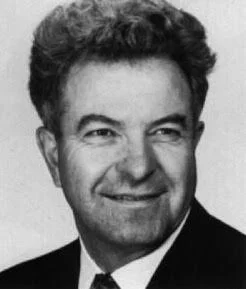
Though he was born in Susquehanna County and raised in Schuylkill County, the impact John Walson had on Luzerne County was immense. That impact extended to every corner of the globe. Born in 1915 as John Walsonavich, Walson grew up fascinated by electricity, and he even built an intercom connecting his childhood home to the family barn. He graduated from Mahanoy Township High School, not far from Mahanoy City in Schuylkill County.
Following high school, Walson went to Chicago to attend Loyola University with the intention of becoming a physician. Before long, however, Walson was drawn back into the world of electricity, and he earned an engineering degree from Coyne Electrical School. His technical knowledge was then molded by his first professional experience, that of a line serviceman for Pennsylvania Power and Light (PPL). Walson was a natural salesman and an elite businessman, both skills that he put to the test when he obtained a General Electric franchise in 1945.
Walson began selling television sets in Mahanoy City around 1948. From that small borough, the television sets were essentially useless, as the coal region mountains were too tall to pick up Philadelphia-based stations. To remedy this technical challenge, Walson ran military-grade wiring from an antenna on New Boston Mountain to his appliance shop, which allowed him to connect Mahanoy City homes to the previously unreachable stations. In doing so, Walson invented Community Antenna Television, or what is now known as cable television. At the onset of this model, Walson charged $100 for installation, and subsequent monthly charges of $2.
In Mahanoy City, Walson’s innovation was a sensation. People would gather around the appliance store to watch sports and variety shows, causing streets to close down. Technically, Walson was very much on the cutting edge. He was the first cable operator to use microwave transmissions and coaxial cables to bring service to consumers.
In time, Walson’s operation became known as Service Electric, and its offerings continued to expand. He made it his duty to provide wider access to television, starting with markets outside of Philadelphia — particularly New York City. Service Electric itself extended far beyond Mahanoy City. By the 1970s, Service Electric had launched TV2, the first nightly evening newscast in color, and broadcasted Congressional matters in a precursor to C-SPAN.
Service Electric opened an office in Wilkes-Barre in 1965, though this office was damaged during the Hurricane Agnes flooding in 1972. Despite the setback, 1972 proved to be a seminal year for Service Electric. Walson was at the forefront of lobbying Home Box Office (HBO) to launch its new and bold television model in Wilkes-Barre, as Service Electric had already established a connection to the New York market where HBO was based.
On November 8, 1972, HBO went live to about 400 residents of the Wyoming Valley. The first broadcast included an unedited and commercial-less screening of the film Sometimes a Great Notion and a hockey game between the New York Rangers and Vancouver Canucks. The first night was a nightmare for signal purposes: cold, rainy, and windy. For some time, HBO operated at a loss. However, the service eventually became cheaper and more reliable, and it had millions of subscribers within a decade of launch. Thanks to Walson’s regional ties and continued influence, the first original HBO broadcast was a polka festival.
Walson was recognized in 1979 by both the United States Congress and the National Cable Television Association as the founder of cable television. In addition, Wilkes-Barre was noted as being the birthplace of HBO by a plaque placed on Public Square in 1984. As a leader in the communications industry, Walson foresaw innovations like video calls and the Internet decades before their invention or mainstream use. For his contributions, Walson was inducted into the Broadcasting and Cable Hall of Fame in 1993.
Walson died in 1993, but Service Electric remains a powerful force. It continues to provide service to Wilkes-Barre, the Lehigh Valley, and Northwest New Jersey. John Walson’s company remains a major employer and source of philanthropy, as well as an inspiration to countless television providers and future generations of the Walson family.