mark cohen
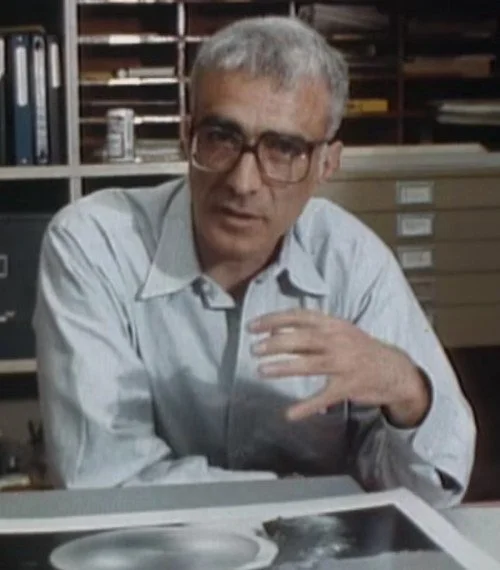
Mark Cohen was born in Wilkes-Barre in 1943, and was raised on the west side of the Wyoming Valley. He attended Forty Fort High School, and won local camera contests for his photography work, which showed great potential. He also attended Penn State University and Wilkes College (now University) between 1961 and 1965. Both schools recognized Cohen’s talents, and hosted his first solo photography exhibitions. Upon graduating, Cohen opened a commercial photo studio in Wilkes-Barre — the aptly-named Mark Cohen Studio — in 1966.
Though Cohen submitted photos to local newspapers and snapped standard wedding photos and headshots during his early years in professional photography, he is known worldwide for being a street photography pioneer. He is especially celebrated for his groundbreaking, intrusive approach to capturing his subjects during their daily lives. Cohen would go onto the streets of Wilkes-Barre and snap tons of photos per evening of people shopping, walking, or performing any number of mundane tasks.
Naturally, Cohen’s methods contained a hint of danger, with some subjects being unenthused about their photo being taken. For both privacy and artistic purposes, faces were almost always left out of frame — another hallmark of Cohen’s style. The Luzerne County of the 1970s, in all of its beauty and Rust Belt darkness, was captured in vivid detail by Mark Cohen’s photos. Cohen experimented with different focal lenses, but most of his photographs were taken through a wide-angle lens with a flash, and almost always in black and white.
Cohen’s first professional solo exhibition was at the Spanish National Tourist Office in New York City, and his first exhibition with a group was at the George Eastman House in 1969. An additional solo exhibition at the Museum of Modern Art (MoMA) in 1973 brought the images of Luzerne County to one of the United States’ greatest art institutions, as did his exhibition at the Art Institute of Chicago two years later. Cohen was awarded Guggenheim fellowships in both 1971 and 1976, and a National Endowment for the Arts grant in 1975.
Cohen made a return trip to the MoMA in 1978 as a participant in the group exhibition Mirrors and Windows: American Photography Since 1960, and kept up his professional momentum into the 1980s. In 1982, he released the booklet Images and helped to celebrate Pennsylvania’s 300th anniversary with the exhibition Celebration of Friends at College Misericordia (now Misericordia University). In recognition of his artistic contributions, Cohen capped off 1982 by receiving the Theodore L. Hazlett Memorial Award for Excellence in the Arts.
Outside of Luzerne County, Cohen took trips to other countries and brought his photography style along with him. His trips to England and Mexico were exhibited at Wilkes in 1977 and 1989, respectively. In the midst of his own artistic accomplishments, Cohen helped to teach the next generation of artists. He taught at both Wilkes and King’s College, as well as other schools such as the Rhode Island School of Design and Princeton.
In more modern times, Cohen has published books containing his photographs, including Grim Street in 2005, True Color in 2007, and Mexico in 2016. Cohen published these photos, which were mainly taken decades prior to the book releases, to ensure their preservation going forward. To promote Grim Street, Cohen held signings at Luzerne County bookstores.
In the 2010s, solo exhibitions in Paris and Rotterdam continued to grow the interest in Cohen’s photography. His works are permanently held in the collections of several major art museums, including a number of those that once hosted his exhibitions. His photographs are also on display abroad, including in Australia, Belgium, the United Kingdom, and Canada.
Independent of his global fame, Cohen has lived a quiet, private life. His edgy methods and output have spoken for themselves. Though his snapshots were occasionally controversial, there has been no more intimate portrayal of Luzerne County and its residents than the photographs attributed to Mark Cohen.