Paul Pringle
Class of 2025
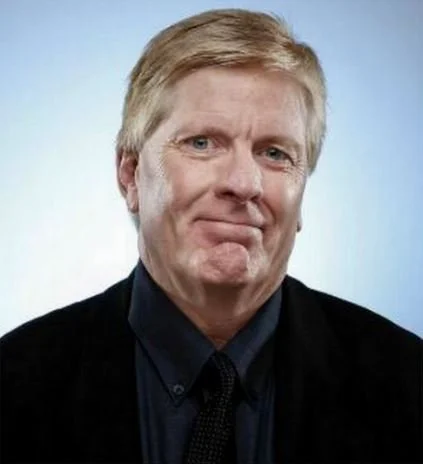
Born in Hazleton and raised in Kingston and Wilkes-Barre, investigative journalist Paul Pringle has committed his professional life to truth and holding corrupted individuals and institutions accountable. With a double-major degree from California State University, Northridge, in journalism and political science, Pringle has the knowledge necessary to cut through the City of Angels’ noise. His journalism career began while pursuing a master’s degree at Penn State University at the Daily Collegian.
From the mid-1980s until the early 2000s, Pringle held a number of print media positions. He worked as a stringer for The Tampa Tribune, the Los Angeles bureau chief for Copley News Service, and the West Coast bureau chief at The Dallas Morning News. In addition to his work for these publications, he also served as a part-time professor of journalism at his alma mater, California State University, Northridge.
In 2001, Pringle joined the Los Angeles Times, where he rose to become one of the premier United States’ investigative journalists. Pringle was a part of the 2004 Pulitzer Prize-winning team, and was especially noted for his work on “What Do You Save From a House Full of Memories?,” a piece of the Times’ extensive Southern California wildfire coverage.
The late 2000s saw Pringle continue to receive national praise for his journalism. In 2008, he won a George Polk Award for Labor Reporting, which, in turn, sprouted from his coverage of corruption in the Service Employees International Union. That same year, he was named a distinguished journalist by the Society of Professional Journalists of Greater Los Angeles, and was a finalist for another Pulitzer in 2009.
In 2010, he drew praise again for his coverage of the mishandling of public funds in the city of Bell, California. His work helping to uncover the extent of the Bell scandal resulted in his second joint Pulitzer Prize. He also shared in a Bingham Prize in 2011 for covering the corruption scandal surrounding the Los Angeles Memorial Coliseum. Other awards won by Pringle in this era of his career included the California Newspaper Publishers Association Freedom of Information Award and Joseph L. Brechner Freedom of Information Award.
Pringle’s dedicated reporting revealed a complicated web of drug abuse and cover-ups on the University of Southern California campus, pertaining to disgraced medical school Dean Carmen Puliafito. Despite pushback from law enforcement and his own superiors, Pringle pushed the Puliafito story through to the public. While investigating the Puliafito case, Pringle helped expose decades of sexual abuse crimes perpetrated by USC gynecologist George Tyndall, and won a third Pulitzer Prize — alongside Matt Hamilton and Harriet Ryan — for his work on the matter.
Pringle married his journalistic integrity to the power of publishing when Celadon Books released his Bad City: Peril and Power in the City of Angels, in which he described the process of bringing the USC scandals to light. Pringle’s book was a best-seller and critical success, and he rightly won the praise and admiration of readers from coast to coast.
A follow-up project to Bad City arrived in 2024 in the form of a 10-part podcast called Fallen Angels: A Story of California Corruption, on which Pringle served as host and executive producer. The Signal Awards subsequently recognized Fallen Angels as being one of the most well-written podcasts available. In 2024, Pringle added another accolade to his name, as he earned the inaugural Center for Integrity in News Reporting print journalism award.
Through his work, Pringle has covered a wide variety of topics, but his chase for the truth remains absolute. Though he is well-decorated, Pringle has given credit to the many sources of information who have assisted him in revealing harsh, uncomfortable realities. In his honest writing, Paul Pringle has found the artistry and impact that can be found in the objective written word.