jozef murgas
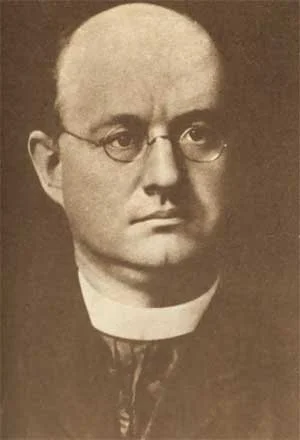
In 1864, Jozef Murgas was born in modern-day Slovakia as a subject of the Austrian Empire. At a time when the study of electricity was still in its infancy, Murgas was receiving an elite education in both his homeland and across Europe. He studied electricity in Vienna and art in Munich and Budapest, but was ultimately called to the priesthood, eventually being ordained in 1888. Though he was brilliant, Murgas’ politics were seen as radical in the eyes of the Austrian Empire, and he emigrated to the United States in 1896.
Settling in Wilkes-Barre, Murgas founded Sacred Heart Slovak Church and became its first pastor. He was a true community leader, helping the influx of his fellow Slovak immigrants find homes, jobs, educational opportunities, and recreational spaces in Luzerne County. Still, he remained interested in electricity and its capabilities, and he set up a laboratory in the basement of Sacred Heart’s rectory.
The primary focus of Murgas’ experiments was wireless telegraphy and its potential as a communication tool. In 1904, he was granted his first patent for his “Wireless Telegraphy Apparatus,” and later began constructing 200-foot transmitting towers in both Wilkes-Barre and Scranton to put his years of research to the test. By this time, Murgas’ studies had caught the attention of just about everyone, and President Theodore Roosevelt even stopped by Murgas’ laboratory during a visit to Luzerne County in 1905.
Murgas proved any remaining skeptics of his research wrong on November 23, 1905, when he successfully demonstrated a wireless telegraphy transmission over land. Among the exchanged messages, represented by dots and dashes similar to Morse Code, were pleasantries between Wilkes-Barre Mayor Frederick C. Kirkendall and Scranton Mayor Alex T. Connell. The transmission drew a large crowd and was nothing short of a spectacle. Even the United States Navy sent a representative to see Murgas’ advancements in action.
Murgas continued his experiments after the live demonstration and, by 1907, he was able to transmit his voice over radio. Shortly after this breakthrough, a storm damaged Murgas’ towers in Wilkes-Barre and destroyed those in Scranton, a catastrophe which greatly hampered his financial backing. Murgas was undeterred, as he remained steadfast in his quest for public good rather than financial gain. True to his character, Murgas used the earnings he received from his experimentation to improve Sacred Heart’s aesthetic.
Thomas Edison, Guglielmo Marconi, and Reginald Fessenden were among Murgas’ admirers, and the priest often equaled or outpaced his contemporaries’ innovations. The speed and precision of Murgas’ “tone system” were the blueprint for future radio technology, with Murgas being granted over a dozen additional patents related to early radio technology. When Murgas' own efforts began to wane, he personally passed his findings to a visiting Marconi.
Considered a true Renaissance man, Murgas remained an artist throughout his life. Though he could have been a renowned religious-based artist, Murgas especially delighted in painting landscapes, which he sold to fund his scientific experiments. Murgas also wrote poetry, played the violin, was fascinated by architecture, and had compiled one of the largest butterfly collections in the United States. An avid outdoorsman, Murgas collected mushrooms, plants, and minerals, and one of his registered patents was for a spinning fishing reel.
Murgas remained closely tied to the Slovak community throughout his life. His revolutionary spirit led him to co-found the Slovak League in America in 1907 and the Slovak Catholic Federation in 1911. In 1918, he was a signatory and co-author of the Pittsburgh Agreement, which led to Czechoslovakia’s independence from Austria-Hungary. He raised a million dollars to help his nation rebuild following the destruction of World War I, and was later awarded a Revolutionary Medal by the National Council of the Czechoslovakian Republic.
Murgas died in 1929 as one of Luzerne County’s most celebrated residents and was interred in Sacred Heart Cemetery, which he helped to establish in life. His likeness has appeared on postage stamps and his name has been passed on through ships, holidays, and anniversary celebrations. In Luzerne County, his legacy looms large thanks to the preservation efforts of the Murgas Amateur Radio Club, the Slovak Heritage Society of Northeastern Pennsylvania, and King’s College. “The Radio Priest” Jozef Murgas continues to connect us through his evergreen humility and innovative spirit.