Mere Mortals
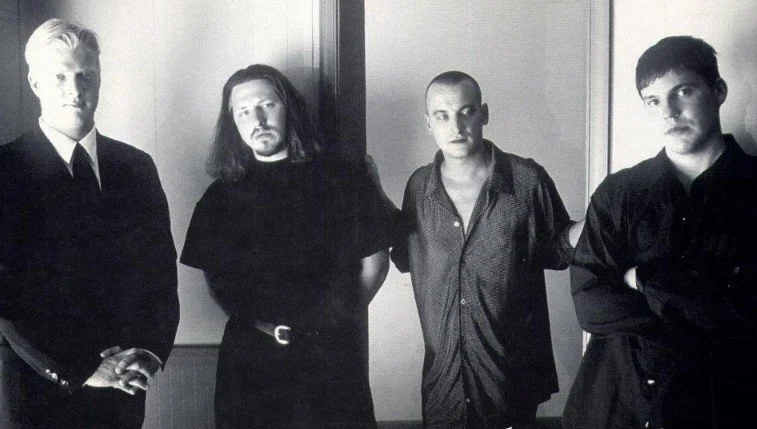
Inducted Members: Eddie Appnel, Pat Flynn, Mark Kiesinger, Billy Lieback, Marko Marcinko, Austin "Buz" O'Malley
Throughout the 1990s, Mere Mortals carried the torch for homegrown Luzerne County bands that were dedicated to writing and performing original songs. Established in 1991 in the Pittston area, the group were proud creators and eager to pull from their vast pool of musical influences to experiment in the studio. Their solid trio of albums shows steady growth and consistent maturity, and represent one of the most profound catalogs in Luzerne County music.
While developing their sound from bassist Mark Kiesinger’s family basement, the members of Mere Mortals realized they had differing musical interests — in a good way. This spoke to the range of genres they were comfortable with working into their own music. Their influences stretched from rock and country to reggae and funk, and from the Police and U2 to the Beatles. Each member brought their own tastes to the table, and the lack of record label oversight allowed the band to freely explore.
Their debut album, In Search of Simple Things, was released in 1992 at a release party at the Staircase. Mere Mortals were resourceful from the start, recruiting experienced musician Rick Manwiller to produce the album at Rock Street Music in Pittston. With songs like “And It Goes Like This” and the title track, In Search of Simple Things received critical acclaim, and they shot a locally-filmed music video for “Cold (Still Life)” to support the album’s release.
The band’s thoughtful lyrics were clearly a standout element in the Mere Mortals experience, and the group’s songwriting received a nod of approval from Billboard magazine following their debut album’s release. Lead vocalist and acoustic guitarist Eddie Appnel and multi-instrumentalist Austin “Buz” O’Malley were Mere Mortals’ primary songwriters, but every member made significant contributions to each of their recordings. Appnel, in particular, had a strong backlog of lyrics, which he began writing as a teenager. Lead guitarist Pat Flynn was a classically trained musician, while Kiesinger and drummer Billy Lieback gave the band a powerful rhythm section.
As Mere Mortals found their local audience, they remained an anomaly in a sea of cover bands. When they would play a cover song during their live sets, they made a deliberate effort to choose songs that were not being played by any other band in the area. Following O’Malley’s departure from their ranks, Mere Mortals leaned into a more guitar-driven sound, but retained their creativity, which was made clear on their second album Grin, released in 1996.
The highlight tunes on Grin included “Funny Animals,” “Ashes On the Sea,” and “Goodnight Calabash.” These tracks and more received local airplay from disc jockeys like George Graham on WVIA and Mike Naydock on WZMT, and fans were able to enjoy them in person at local venues like Casey’s, Jitterbugs, and Market Street Square. The band’s high profile in Luzerne County demanded a mascot called Mr. Zern, as well as a “News of the Mere” newsletter for their most dedicated fans.
Mere Mortals opened for fellow local band the Badlees in 1997 at the F.M. Kirby Center for the Performing Arts, their first show with jazz extraordinaire Marko Marcinko behind the drumkit. With Marcinko on board, the band’s creative direction was altered once more, resulting in their most ambitious record yet: Mondegreen Dreams, produced by local music legend Jerry Hludzik. The album title refers to a phrase long associated with misinterpreted lyrics, and contains a number of the band’s most popular tracks, including “On My Dinosaur” and “Unreal.”
In the search for a record deal, Mere Mortals were taken on a cross country adventure to share their music with audiences outside of Northeast Pennsylvania. They performed in New York, Philadelphia, and at Los Angeles’ iconic Whisky a Go Go. They also played in Las Vegas for the Emerging Artists & Talent in Musical (EAT’M) Conference, Showcase and Festival. By 2001, Appnel had left the band, and the remaining members retired the Mere Mortals name shortly after.
Mere Mortals’ members have continued to enrich Northeast Pennsylvania’s music scene since the band’s dissolution. Collectively, they were local groundbreakers in their dogged devotion to performing their own original music in the face of local norms and quick monetization. In taking the more difficult path, the music of Mere Mortals has become eternal.