thomas hrynkiw
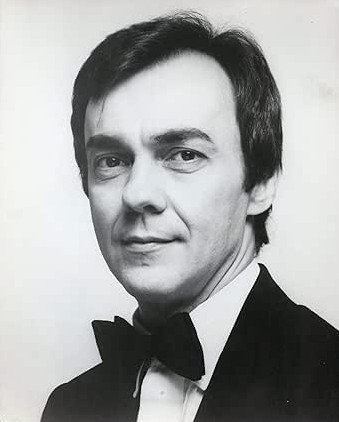
Luzerne County has had its fair share of rock, country, and polka musicians, but not many from the area can say they have cracked into the classical music canon. Thomas Hrynkiw — born in the Heights section of Wilkes-Barre in 1941 — is the exception to this standard. Hrynkiw’s upbringing was filled with family, appreciation for his Ukrainian roots, church, and, of course, music.
Hrynkiw began playing the piano at age 8 and was taught by the great Anne Liva. By 13, he was performing publicly, and, by 16, he was leading a youth orchestra. Hrynkiw was offered an invitation to attend Juilliard, but he opted to study music at Wilkes College instead. He later attended the Manhattan School of Music. Each of these experiences deepened Hrynkiw’s understanding of the classical masters, including Ludwig van Beethoven, Wolfgang Amadeus Mozart, and Franz Liszt.
While a teenager, Hrynkiw won a contest that allowed him to play Pyotr Ilyich Tchaikovsky’s Piano Concerto No. 1 with Leopold Stokowski conducting. Stokowski himself chose Hrynkiw for the opportunity. Locally, Hrynkiw was still a young man when he contributed his talents to the Wilkes-Barre Ballet Theater and the Apollo Club. Though the piano was his primary instrument, Hrynkiw was also proficient in the violin and viola.
Hrynkiw played several major concerts in the United States and Europe as both a soloist and accompanist. In the U.S. alone, venues in which Hrynkiw performed included the Kennedy Center, the Library of Congress, DAR Constitution Hall, and Lincoln Center. Abroad, Hrynkiw played shows in most of Europe’s cultural centers, including London, Paris, Moscow, Amsterdam, and Berlin.
Hrynkiw’s willingness to collaborate with other musicians, including fellow Pennsylvania artist Paul Plishka, was well-documented. His ensembles included the Hillyer-Lucarelli-Hrynkiw Trio, the New American Trio, and the Audubon Quartet. Philharmonics and orchestras of both local and national prominence brought Hrynkiw on as a featured musician, and he performed at important Luzerne County venues like the Fine Arts Fiesta and the Irem Temple.
Hrynkiw was an excellent coordinator, and he lent his management skills to a number of musical organizations. He served as music director of the Ukrainian Institute of America, and as an artistic advisor for the Newport Music Festival and the Festival San Miguel de Allende in Mexico. Hrynkiw played festivals all over the United States, from Florida to Alaska. His festival expertise was brought back to Luzerne County, where he helped to organize local concerts.
Education played a key role in Hrynkiw’s story, particularly in the lessons he offered to aspiring musicians. He gave private piano and vocal lessons, and maintained a vocal studio in New York for teaching purposes. He taught classes at Wilkes and Marywood University, all while guest teaching at other schools, including UCLA, the University of Minnesota, and Dartmouth. Perhaps most interestingly, Hrynkiw led a free clinic on the Wilkes campus to help young artists and entertainers manage performance anxiety.
Over time, Hrynkiw gathered up a number of awards and honors, beginning with a gold medal from the Geneva Competition in 1967. Subsequently, Hrynkiw earned the Frank Huntington Beebe, Harold Bauer, and Music Teacher Association awards. Hrynkiw also received grants from the Institute of International Education.
Hrynkiw’s music was not only enjoyed through live performance, as much of his work was recorded and preserved for future listening. Because Hrynkiw so often played music by both legendary musicians and lesser-known artists, he helped bring both to modern audiences before his passing in 2024. Over the course of an entire lifetime of music, Thomas Hrynkiw brought Luzerne County into the classical pantheon, and vice versa.