james karen
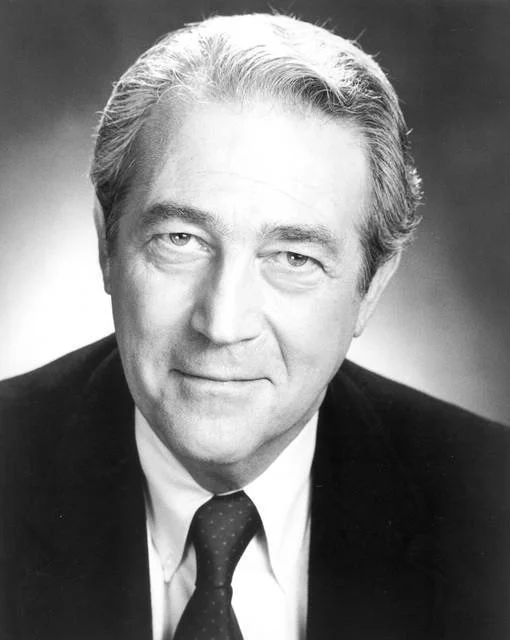
Born in the Wyoming Valley in 1923, James Karen was introduced to films just as synchronized sound was moving into the mainstream. He would go to the movie theater with his father Joe, an illiterate coal mining immigrant from Russia, to read the silent film titles. James’ early life in Wilkes-Barre was marked by national and local tragedies through the Great Depression and the 1936 flood. A chance encounter with future U.S. Representative Dan Flood, then an amateur actor at the Little Theatre of Wilkes-Barre, lightened the young Karen’s path. He became involved in the local theater scene as a youth performer, and remained lifelong friends with Flood and his wife, Catherine.
Karen moved to New York in the early 1940s, and attributed much of his success there to working in community theater in Wilkes-Barre. He attended the Neighborhood Playhouse School of the Theatre in New York and later served in the Aleutian Islands during World War II. Upon returning home, Karen landed his big break when he became Karl Malden’s understudy in the original production of A Streetcar Named Desire, in which Karen also played a supporting role. This led to his participation in one of the last great theatrical train tours of the country with the Streetcar production. Karen was offered a film contract by Metro-Goldwyn-Mayer when the production played Los Angeles, but turned it down to focus on theater. Additional notable Broadway credits to Karen’s name include Who’s Afraid of Virginia Woolf? and Cactus Flower.
Karen did eventually make the jump to film, and was cast in a number of iconic movies, including Hercules in New York (with a young Arnold Schwarzenegger), All the President’s Men, The China Syndrome, and the horror classic Poltergeist. By the time he appeared as real estate developer Lewis Teague in the latter film, Karen was already one of the industry’s most respected character actors.
A huge win for Karen’s legacy came in 1985, when he portrayed Frank Johnson in The Return of the Living Dead. Generations of fans continue to admire Karen’s work in the cult classic. He contributed more than his acting to what is perhaps his most notable role, as he helped to write most of Johnson’s scenes in the film. Karen was nominated for a Saturn Award for his performance. Among Karen’s many fans was director Oliver Stone, who went on to cast him in Wall Street, Nixon, and Any Given Sunday.
Aside from his many film appearances, Karen was also a mainstay on television for decades. Long-running soap operas like As the World Turns and All My Children were among his daytime credits, but he also made memorable appearances in primetime on Eight is Enough, M*A*S*H, Cheers, The Golden Girls, The Jeffersons, Seinfeld, and several other high-profile shows. While many of Karen’s characters — and the actor himself — were good-natured, he did have a knack for playing despicable individuals, including the vile Nathan Lassiter in Little House: The Last Farewell, the finale of Little House on the Prairie.
Karen was an ever-present figure on screens big and small, and was well-known from the 1970s to the 1990s as “Mr. Pathmark,” the pitchman for the Pathmark supermarket chain. He continued to act into the 21st century, working alongside esteemed directors and movie stars in films like Mulholland Drive and The Pursuit of Happyness. He even contributed voiceover work to popular animated shows like American Dad! and The Cleveland Show.
Throughout his career, Karen never prioritized money or billing as driving factors, and he frequently acted without salary in student films. A lifelong member of the Actors Studio, he was personal friends with many of the biggest stars in Hollywood history, from George Clooney to Morgan Freeman. His most notable friendship in the industry may have been the one he shared with the silent film star Buster Keaton. Karen promoted Keaton’s legacy and work for many years, culminating in his hosting of the 2004 documentary So Funny It Hurt: Buster Keaton and MGM.
Karen returned to Luzerne County frequently, and served as the Little Theatre’s keynote speaker during the venue’s 65th anniversary in 1988. He later appeared alongside his wife Alba Francesca in a local United Way film called Homecoming in 1991, and participated in the Penn State Wilkes-Barre Fall Film series at Movies 14 in 2006.
At the time of his death in 2018, Karen had put about 80 years into his acting career, from the Little Theatre to major blockbusters. He was generous with his time, and routinely showed the true value of character acting. James Karen’s contributions to film as a supporting player are more impressive than those of most leading men.