Santo Loquasto
Class of 2023
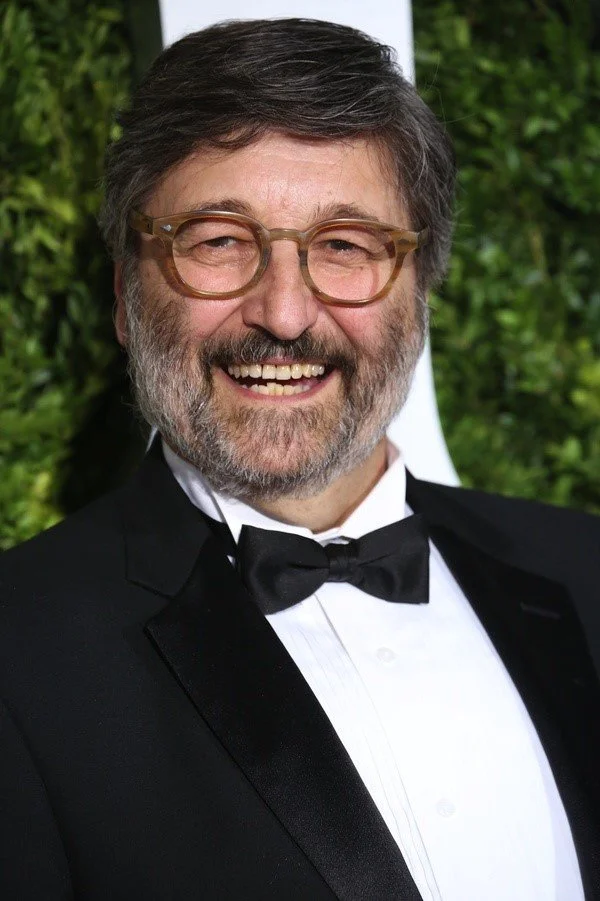
Luzerne County native Santo Loquasto began creating impressive environments before the stage and screen became his canvases. During his formative years, he would create sets and costumes out of items he would find in his backyard. This became an informal education and an introduction to set and costume design. He backed up his young creative streak with an intellectual approach to design, which he gained as a scholar of politics, economics, literature and art at King’s College and Yale Drama School.
All the while, Loquasto proved to be a true workhorse, a meticulous designer and a reliable collaborator. One of his breakthrough gigs came locally as a designer at the Showcase Theater in Wilkes-Barre, but his interests went beyond one or two niche roles behind the scenes. Loquasto was broadly interested in the totality of a theater production. While at Yale, he worked tirelessly to gather up as much knowledge as possible.
Loquasto was already one of the brightest minds in the theater community when he arrived on Broadway in 1972. His wide-ranging knowledge allowed him to move up through the industry, providing valuable insight and leadership along the way. By the time he turned 30 in 1974, he was already a Tony nominee for best scenic design. That nomination was for That Championship Season, a story by another giant in the Northeast Pennsylvania art scene, Jason Miller.
When it comes to accolades, Loquasto is truly one of the most decorated theatrical artists of his generation. He won his first Tony Award in 1977 for his costume design of The Cherry Orchard. He kept up his awards dominance as the years went by, winning a Tony in back-to-back years for Cafe Crown in 1989 and Grand Hotel: The Musical in 1990. Worth mentioning is that these consecutive victories came in different categories: best scenic design and best costume design, respectively.
While he was racking up wins and nominations in the theater scene, Loquasto found the time to transition into a different medium: film. In addition to his work on hits like 1988’s Big, he is well-known by cinephiles as a frequent collaborator of legendary filmmaker Woody Allen. He scored a costume design nomination at the Oscars for Allen’s 1983 film Zelig, and was nominated twice more for his production design achievements on Radio Days and Bullets Over Broadway.
Beyond his work in film and theater, Loquasto has also carved out a reputation for his work in dance and ballet productions in the United States and abroad. In this field, Loquasto has collaborated with legendary choreographers like Mikhail Baryshnikov, Jerome Robbins and Twyla Tharpe, and lent his talents to national productions of Swan Lake and The Nutcracker, just to name a few.
Loquasto remained an important figure in the national theater scene in the new millenium. His work in the 2000s alone would be worthy of exceptional praise. Just run down the list: The Elephant Man in 2002, Glengarry Glen Ross in 2005, Inherit the Wind in 2007, A Man for All Seasons in 2008, and colossal achievements scattered in between. His 2004 induction into the Theater Hall of Fame is a testament to his craftsmanship and towering reputation in the theater community.
Loquasto’s career trajectory is proof that a Hall of Fame induction does not signal the stagnation of praise. In fact, Loquasto was nominated for more Tony Awards in the 2010s than in any other decade of his career. He won his fourth Tony for his costume design of the 2017 revival of Hello, Dolly!, 40 years after his first win. With a nod in 2022 for his costume design for The Music Man, Loquasto received a Tony nomination in a sixth consecutive decade.
If you’ve seen a Broadway show since the 1970s, you have probably seen the work of Santo Loquasto. His career is marked by consistency and longevity, and he often finds himself recognized and praised by his peers. A titan in two connected but ultimately distinct forms of design, few figures in American theater have left as big of a mark as Santo Loquasto.