george korson
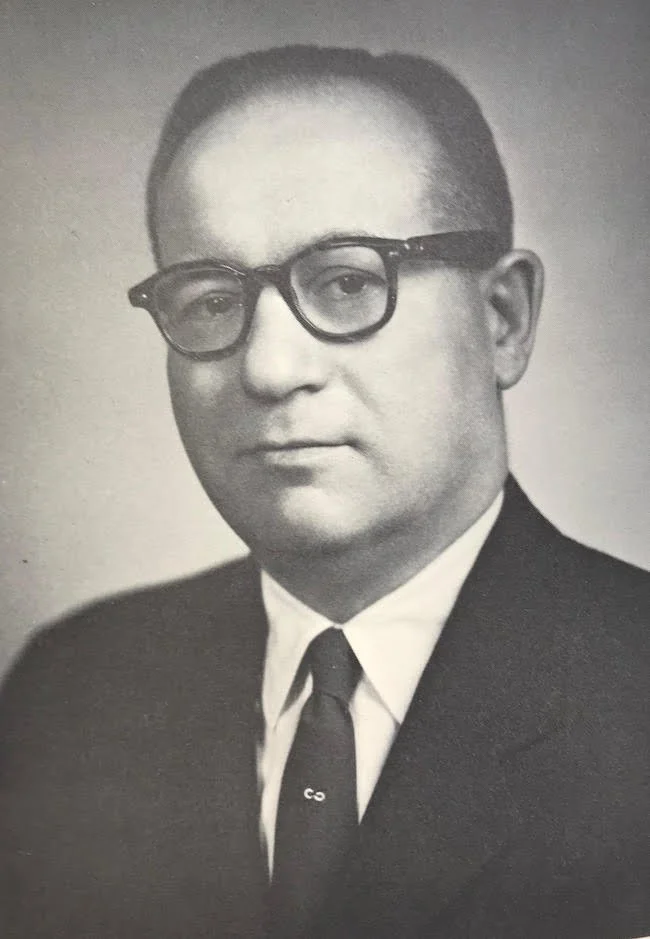
George Korson was born in Ukraine in 1899, and emigrated with his family to Brooklyn in 1906. Despite this, Korson always thought of Wilkes-Barre, where he and his family moved in the early 1910s, as his hometown. Newspapers played a big role in Korson’s early life, as he was a delivery boy in his youth. He also worked for the newspaper at his alma mater Wilkes-Barre High School, which would later be renamed James M. Coughlin High School.
Korson’s first professional gig out of high school was as a cub reporter at the Wilkes-Barre Record, though his first especially notable piece of writing came outside of pure journalism. He served with British forces in Palestine and Egypt during World War I, and wrote eloquently about his experience in the Middle East and the harshness of life during wartime. These stories would later be published in the Wilkes-Barre Record. Following the war, Korson spent about a year studying at Columbia University, but needed to return to Northeast Pennsylvania to help financially support his family.
Eventually, Korson landed a job at the Pottsville Republican, where he was assigned to cover coal miners and their families. Korson went to his local library to find a book related to the culture of coal miners, but discovered that no such documentation existed. Identifying this gap in information, Korson began working on a book of his own, using his reporting skills to follow leads and clues to gather as much insight as possible. In the process, Korson established a vast collection of songs and stories passed on by local coal miners. This work by Korson was a shift from traditional American folklore collections, which were almost exclusively concerned with pre-industrial life.
Korson’s collection helped to preserve the voices of coal mining entertainers who otherwise would have been lost to history, including Wilkes-Barre’s own Con Carbon and Dennis P. Coyle. Major themes recognized by Korson included labor reform efforts, as well as the immigrant traditions that made for a surprisingly vibrant entertainment scene in the region’s coal towns. Because the miners did not have immediate access to the entertainment options enjoyed by city dwellers, they shared stories, songs, and information amongst each other. The information Korson gathered culminated in his first book, 1927’s Songs and Ballads of the Anthracite Miner. The year prior, Korson married Rae Rosenblatt, who supported his work and was a renowned folklore librarian in her own right.
In subsequent decades, Korson continued to explore the coal mining industry’s folklore. His books include Minstrels of the Mine Patch: Songs and Stories of the Anthracite Industry (1938), Pennsylvania Songs and Legends (1949), and Black Rock: Mining Folklore of the Pennsylvania Dutch (1960). Songs and Legends represented Pennsylvania in the state-by-state book collection of First Lady Mamie Eisenhower, and Black Rock won the Chicago Folklore Prize.
Coal miners were candid with Korson about their experiences, and his books and recordings are a snapshot into the lesser-known elements of daily life as a coal miner. He frequently heard ghost stories, developing dark folklore about the eerie sounds, phantoms, and hauntings that the miners claimed to witness on the job. This detailed approach to storytelling made Korson an authority and well-respected figure in the historian, folklorist, and journalist communities.
Korson founded the Pennsylvania Folk Festival and the Pennsylvania Folklore Society, and served as a director of both organizations. He also helped to establish the famed Newport Folk Festival, and was inducted into the American Folklore Society’s honorary circle of fellows in 1960. Most of Korson’s folklore work in Pennsylvania was performed while he held down full-time positions elsewhere, most notable as the editor of the American Red Cross’ national publication, The Red Cross Courier.
In his later years, Korson wished for his work to be held in the area where it was compiled, which led him to donate his complete Korson Folklore Archive to King’s College in 1965. At the time of his death in 1967, Korson was planning to make the library at King’s College his new base of operations for additional research.
In 2004, the Korson Folklife Archive was transferred to the American Folklife Center at the Library of Congress, where it remains ripe for discovery. Korson’s legacy has primarily been carried on by his descendants, his biographer Angus K. Gillespie, and Luzerne County musicians like Lex Romane and Don Shappelle, who continue to play the songs compiled by Korson. As the father of industrial folklore, George Korson did more than anyone to humanize and understand the industry that built Luzerne County.