George Catlin
Class of 2023
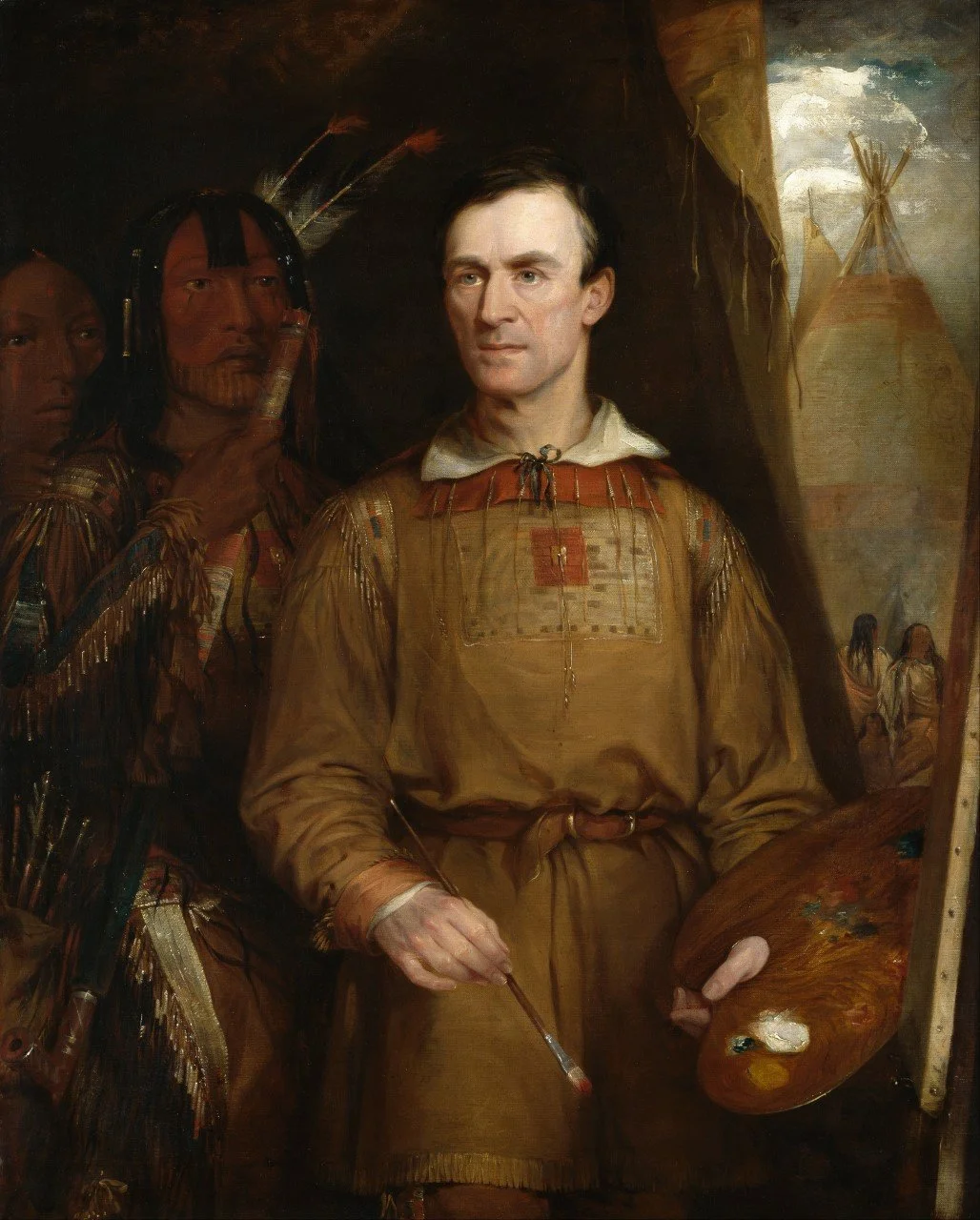
Luzerne County has been producing great artists for nearly its entire existence. In 1796, just ten years after Luzerne County was established, George Catlin was born in Wilkes-Barre. In his youth, he met frontier travelers who would pass over the Susquehanna River on their way to the American West. Catlin took inspiration from these pioneers, but it would be the people who already lived in the west that would help him establish his world-renowned artistic style.
Catlin was expected to follow in his father’s footsteps and become a lawyer. He was admitted to the Bar in his early 20s and professionally practiced law for a few years, but Catlin’s true passion was in art. Specifically, Catlin was a gifted portraitist with a deep curiosity about the natural world. He studied art in Philadelphia, where his skills were given room to bloom.
During his years in Philadelphia, Catlin deepened his appreciation for the American West by learning more about Native American cultures. Though he was interested in these cultures as a boy and young adult, Catlin’s intrigue was inflamed when he had a semi-random meeting with tribal representatives. From there, Catlin’s path was set as an explorer who would document the lives of Native Americans through his art.
Catlin made his first major venture to the west in 1830, the same year he met Gen. William Clark (of Lewis and Clark fame) and made St. Louis his base of operations. Clark taught Catlin how to navigate the lands along the Missouri River, just as an awful chapter in American history was about to be written. The Indian Removal Act of 1830 added a sense of urgency to Catlin’s work. In order to preserve history with his brush, he needed to work quickly and diplomatically with the native tribes.
Throughout the 1830s, Catlin would take extensive trips along the Missouri River, communicating with Native American chiefs and painting portraits of tribe members. Catlin’s portraits helped to humanize Native Americans to a white and unnecessarily wary audience, but his work did not take the eastern United States by storm in quite the way he had hoped. Still, Catlin continued working and finished the 1830s with hundreds of brilliant portraits to his name.
In addition to his accomplished life as an artist, Catlin proved to be a true Renaissance man. His controversial adventures to areas such as the pipestone quarries, now a national monument, are the stuff of legend. He collected countless artifacts during his travels and attempted to have his work officially recognized by the United States Congress in 1838. This attempt failed, so Catlin looked beyond his country’s borders to make a cultural mark.
Europe ended up being the continent in which Catlin’s North American treasures and art would be most valued. His portrait displays, as well as his enthusiastic showmanship, attracted crowds in major urban centers such as London and Brussels. The high point of Catlin's career was almost certainly when his live “Wild West” performances were brought to audiences at the Louvre in Paris. Though his 19th century performances were likely offensive by modern standards, Catlin successfully brought his genuine appreciation of Native American culture to a wider audience.
Catlin eventually faded away from the mainstream and reluctantly sold his collection, but he reinvented his style and kept growing his catalog of paintings and writings. After a few adventures in Europe and South America, the ever-ambitious Catlin landed a final but critical artistic residency at the Smithsonian in Washington D.C. This residency came at the request of Joseph Henry, the museum’s first secretary, who would become a powerful ally to Catlin’s legacy.
Catlin passed away in 1872, but his notoriety was only just beginning. His original collection of Native American portraits and artifacts was purchased by the Smithsonian after his death, finally realizing the preservation that Catlin so desired for his work. Today, Catlin’s pieces are on display in museums across the United States. All Luzerne County artists who have followed George Catlin walk down the path he cleared.